Running by Feel
I used to count every stride.
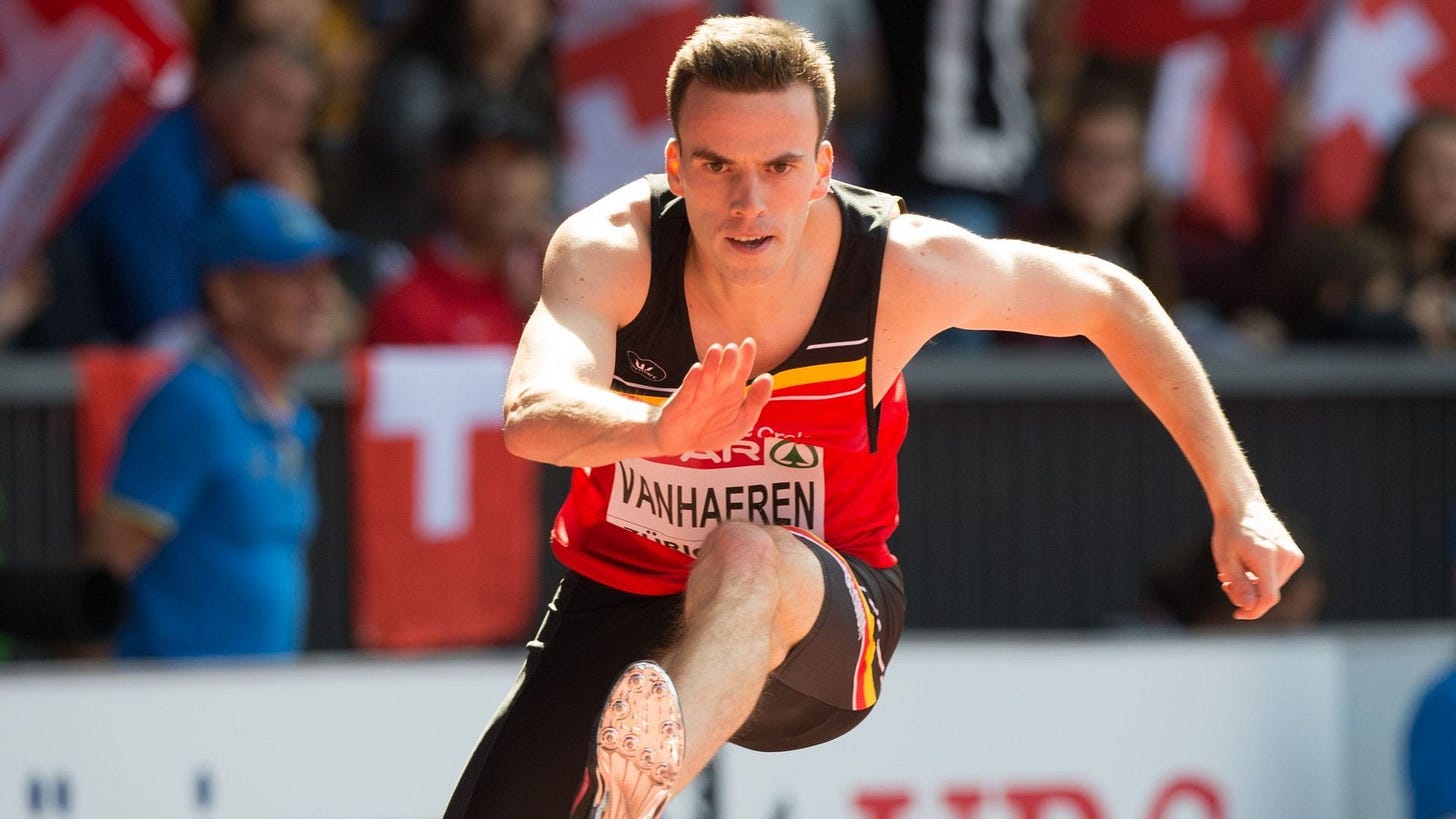
As a 400m hurdler, that was the job. Fourteen steps between hurdles, alternating lead leg at every barrier, left, right, left, right, until hurdle six, where I’d switch into fifteen. Every rep, every race, chasing that perfect rhythm. One stride off and the whole pattern would unravel.
But here’s what the hurdles taught me in the end: no athlete is perfect. You can chase that rhythm your entire career and never quite own it.
What I did bring with me into coaching was a love for data. Heart rate zones, lactate curves, pace targets. Data is the language your body speaks, and learning to read it can make you a better runner. Seven years into coaching, I still believe that.
But seven years of working with real athletes, people with jobs, families, good weeks and terrible weeks, also taught me something heart rate monitors never could.
Data tells you what happened. Feel tells you what’s happening.
And in the moments that matter most, halfway through a marathon, deep into a threshold session, standing on a start line with tired legs, you don’t have a lab. You don’t have a graph. You have your body, and it’s talking to you.
The question is: are you listening?
Even Perfect Data Has Question Marks
We all know that lactate threshold and heart rate zones can shift from day to day. That’s what makes lactate testing interesting. It can verify intensity in a way that feel alone sometimes can’t. But even lactate values are influenced by dozens of factors. If you really wanted to use them precisely, you’d almost have to measure every single session, in every possible scenario. And even then, you’d still have question marks.
So instead of overfocusing on exact lactate numbers or chasing perfect heart rate values, I want to ask a different question.
How did that feel?
How are the legs? Do you feel tired? Do you feel smooth? The athlete will always be the first to know when the body is saying yes or no. When to push. When to hold back.
Before any watch, before any strip, the body already answered.
The Skill Nobody Trains
Here’s what I believe: listening to your body is a skill. And like any skill, it needs practice.
Most runners aren’t pro athletes. Most have a full-time job, kids, a life that doesn’t revolve around training. Their readiness shifts day to day, week to week. A stressful week at work, a bad night of sleep, a family weekend that drained every last bit of energy. All of that walks onto the track with you.
That athlete needs to know how their body behaves after a long day. They need to recognise when the body is ready to perform, and when it’s better to hold back and skip the interval for today. No watch can tell you that. No algorithm either. Only you can.
And when race day comes, when you hit the halfway mark of a marathon and the real race begins, you need to know exactly what your body is telling you. Can I push? Should I wait? What do I do? If you’ve trained that skill, if you’re completely in tune with the feeling of running well, you’ll make the right decision without hesitation.
It’s a skill that makes or breaks a race.
What This Looks Like in Practice
Let’s make it concrete.
The easy long run.
You’ve got a zone 1 easy long run on the programme. Keep it easy. Can you talk, sing, and laugh while running? Good. You’re probably running at exactly the intensity you need for those mitochondrial adaptations. No watch required.
The threshold day that finds its rhythm.
Now it’s a threshold day. Go at a pace that feels just about under control, one that you could hold today, for sure, for about an hour. You do your first 1K rep and it’s a bit slow. Did you just miss your threshold pace zone? Did you ruin the session and train a completely different physiological adaptation?
No. Your body doesn’t work in black and white. You probably still hit a very good intensity. And for most runners, it’s better to be slightly under than slightly over.
So you go again. Same feeling. And something shifts. It feels smoother, the pace picks up. Not because you pushed harder, but because your body woke up. After a long day at work, it needed a moment. Now it’s responding.
That feeling? That’s the body saying: I’m ready to work.
Still feeling good? Under control? Approaching the edge of your threshold zone? Do you pull back because the number says so?
No. If you feel good and you know you can sustain it, you keep going. You’re having a good running day. Enjoy it. Don’t ruin it by clinging to certain zones. That is working with your body. That is listening.
The threshold day that doesn’t.
And then there are the other days. Legs feel heavy, it’s not coming together, every rep feels like a grind. Don’t push it. The pace should be slower, and that’s okay. You’re still getting the adaptations you need. But honestly? You probably need a good night’s sleep even more.
Feel First
Here’s what I keep coming back to.
When we use data, pace, heart rate, lactate, shouldn’t we start from feeling first? When you wake up in the morning, before you check your sleep score, before you open the app, just ask yourself: how do I feel? Did I sleep well? Do I feel fresh? Tired? Ready?
Analyse the data later. But don’t let it tell you how you feel before you’ve had the chance to feel it yourself.
As a coach, I ask my athletes all the time. How do you feel? How did the long run feel? What are the legs like today? How did threshold feel? I want that answer before I look at a single number. It’s the information I need before I can make any judgement about their performance.
And yes, some athletes want the graphs. They want the algorithms telling them how much better they’re getting. They want the proof.
Me? I just want to know how you feel.
About the author
Stef Vanhaeren is a former professional 400m hurdler who’s training for marathons. He has a fantastic girlfriend and 2 kids age 2 and 4. He is also a Performance coach and Partner of Forward Coaching. They are a based in Antwerp, Belgium and they help endurance athletes achieve their goals.
You can find Stef on:
Stef is also an augo founding coach. With us since the beginning, helping us bring to life our vision. Thank you, Stef!
We leave you with Stef’s words about augo:
As AI and data continue to evolve, it’s easy to get lost in numbers and forget the human behind the athlete. augo allows me to connect data with real athlete feedback, leading to more meaningful insights and better coaching decisions.