Coaching Through the Cycle and Perimenopause: Why Generic Plans Fail Female Athletes
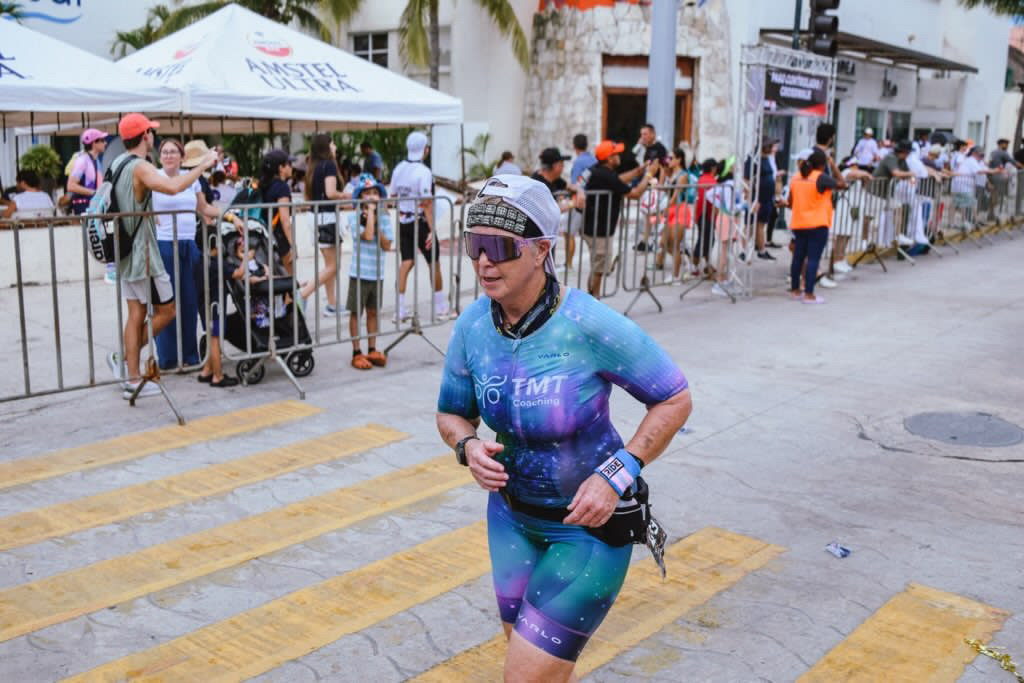
About the author: Coach Megan Tobin is the founder of TMT Coaching and an augo founding coach. She works with endurance athletes of all ages, sizes, genders, and speeds, with a particular focus on helping female athletes train smarter through every phase of life.
In this article:
Responses to the menstrual cycle vary wildly between athletes — Day 1 wipes out one athlete and produces peak power for another.
Generic "cycle-synced" training plans miss that variation and can undermine athlete confidence.
The right approach is to repeat the same workout across consecutive cycles and layer objective data with honest subjective feedback.
Perimenopause keeps shifting the rules — subjective feedback becomes essential, not optional.
The real tool isn't the tracker or the protocol — it's the coach-athlete partnership and the feedback loop inside it.
If you've spent any time in the endurance world, you've probably come across some version of a "cycle-synced training plan" — a tidy chart telling you to do your hard efforts in the follicular phase, dial it back in the luteal phase, and rest during your period. Clean. Simple. And for a lot of the athletes I coach who identify as female? Completely wrong for them.
Here's the truth: there is no universal prescription for training around your cycle. And honestly, that's not a flaw in the system — that's just the reality of coaching humans.
Why do cycle-synced training plans fail many female athletes?
Cycle-synced plans assume every female athlete responds the same way to each phase of her cycle, but real-world responses vary widely. Some athletes are wiped out on Day 1, others post their best numbers on the same day — a single template can't capture that, and applying one anyway often misallocates hard sessions and erodes confidence.
I work with a wide range of athletes who identify as female, and the variation I see in how they respond to their cycles is remarkable. Some of my athletes feel the drag in the few days leading up to their period — the bloating, the fatigue, the general feeling that the couch is calling louder than the track. For them, we might soften the load in those final days of the luteal phase and protect their recovery.
Others? They get completely taken out on Day 1. We're talking cramps, nausea, the works. Pushing through a threshold run on that day isn't gritty — it's counterproductive.
And then there's the group that genuinely surprises people when I tell them: some of my athletes hit peak power on Day 1. Their best numbers. Their sharpest efforts. If I'd told them to rest based on a generic protocol, we'd have missed some incredible training opportunities — and worse, we'd have undermined their confidence in what their body is capable of.
How should coaches train athletes around the menstrual cycle?
Collect data, have honest conversations, and repeat across multiple cycles before making any prescription. Patterns only emerge once you've stacked objective numbers next to subjective feedback over two or three cycles — and only then can adjustments be made with confidence.
One of my favorite approaches early in working with an athlete is to assign a similar — sometimes identical — workout on Day 1 across a few consecutive cycles. Not to push through anything, but to gather information. How did they feel going in? How did the effort feel during? What did the numbers say? And maybe most importantly — how did they recover in the days after?
When you layer that objective data alongside honest subjective feedback, patterns start to emerge. Maybe they always feel sluggish on Day 1 but recover fast and are flying by Day 2. Maybe their power numbers look fine but their perceived effort is through the roof and they're wiped for three days afterward. Maybe they're consistently stronger on Day 1 than any other point in their cycle.
Once we have that picture, then we can start making informed adjustments to future training blocks. Not before. This is the same principle that underpins why subjective context matters as much as objective metrics — the numbers only mean something when paired with how the athlete actually felt.
How does perimenopause change endurance training?
Perimenopause is a years-long transition in which sleep, recovery, and energy levels shift unpredictably from month to month — sometimes from week to week. What worked six months ago may stop working today, so coaches have to hold plans loosely and weight subjective feedback alongside HRV, pace, and heart rate data.
If navigating training around a regular cycle requires patience and attentiveness, perimenopause requires all of that and then some — because the rules keep shifting.
Perimenopause isn't a single phase with predictable patterns. It's a years-long transition that can look completely different from one month to the next, let alone one year to the next. Sleep gets disrupted. Recovery windows change. Energy levels fluctuate in ways that feel disconnected from training load. What worked beautifully for an athlete six months ago might feel completely wrong today.
This is where data remains valuable, but subjective feedback becomes essential.
I can look at an athlete's HRV trends, their pace and power data, their resting heart rate — and all of that matters. But when they tell me that something feels off, that they're not recovering the way they used to, that a workout that should have felt moderate left them flattened for two days — I listen to that. I believe them. And we adjust.
Perimenopause asks coaches to hold our plans a little more loosely and stay in close, ongoing conversation with our athletes. The training prescription that's working now might need to evolve in three months. That's not failure. That's good coaching.
What actually makes coaching through the cycle work?
The partnership between coach and athlete — built on real communication, trust, and a willingness to keep learning together — is what makes everything else work. Tracking tools and protocols help, but they can't substitute for an athlete feeling safe enough to say "something is off" and a coach who listens instead of pushing harder.
I've said it before and I'll keep saying it:
Data tells part of the story. The athlete tells the rest.
The coaches and athletes who navigate this well aren't the ones with the most sophisticated tracking apps or tools, though those help. They're the ones who have built genuine communication into their coaching relationship — where an athlete feels safe saying "I don't know what's going on but something is off," and where a coach listens, adjusts, and doesn't default to pushing harder as the answer.
When that partnership is strong, when the feedback loop is real and consistent, athletes don't just get through their cycle or their perimenopause transition — they flourish through it. They learn their bodies in ways that make them more resilient, more confident, and ultimately better athletes over the long haul.
That's the goal. Not a perfect plan. A real relationship built on attention, trust, and a willingness to keep learning together. It's the same lens Bevan McKinnon explores in why endurance coaching is interpretation, not prescription.
About the author
Coach Megan Tobin works with athletes of all ages, sizes, genders, feeds, and speeds at TMT Coaching, but especially loves helping female endurance athletes become better. Learn more at tmtcoaching.com.
She's also an augo founding coach — helping us shape the platform since its early days. Thank you, Megan!
Where to find Megan:
TMT Coaching: tmtcoaching.com